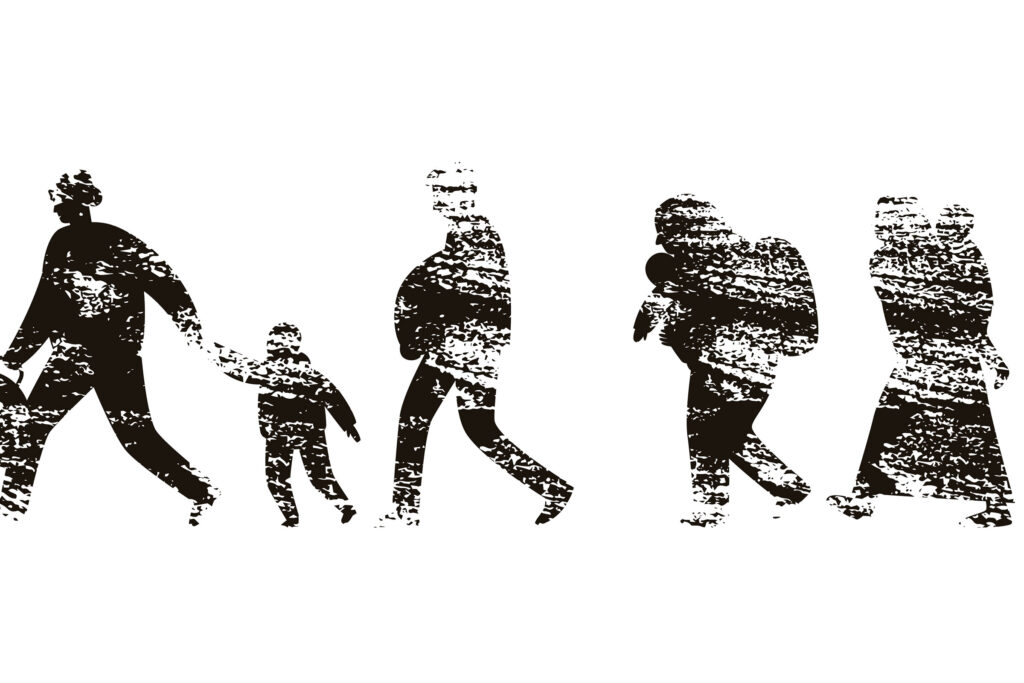
Among the many dangers facing refugees, migrants and displaced people on their journeys is gender-based violence, a broad category including but not limited to sexual assault. Experts estimate that about a quarter of women, 5% of men and 50% of LGBTQI+ people journeying north from Central America experience gender-based violence en route. Many survivors never tell anyone about the violence they’ve experienced. Their silence often bars them from services that could help them heal, recover, obtain justice and prevent further harm.
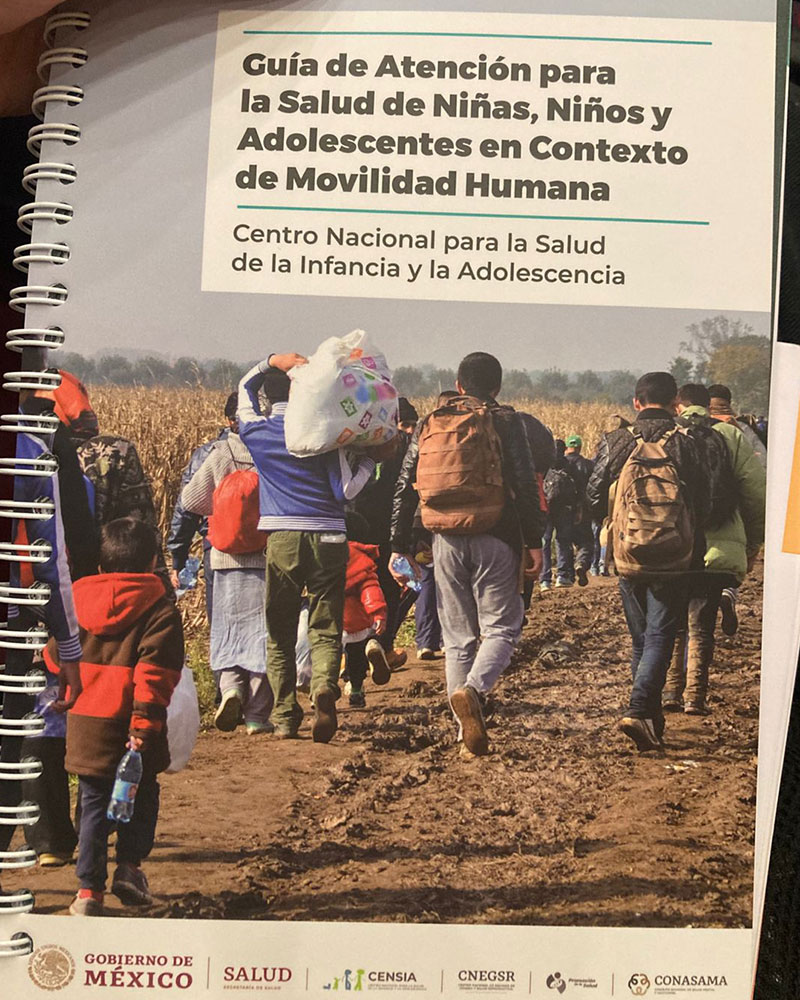
To help create an environment where survivors feel comfortable disclosing such experiences, Kim Thuy Seelinger, JD, a professor of practice at the School of Public Health at Washington University in St. Louis, and colleagues have created a toolkit for training service providers who work with populations that are on the move. Since its launch in 2022, the toolkit has been used in several countries around the world, and has recently been incorporated into the Mexican Ministry of Health’s national guidance related to work with migrant children.
Seelinger first became interested in the question of why some survivors come forward and others do not when she was providing legal support to asylum seekers in New York City and San Francisco from 2002 to 2010. Her clients found it difficult to talk about episodes of gender-based violence, even when doing so would strengthen their cases for asylum.
“Many of them had completely legitimate and strong claims for asylum, but it was really hard when the form of harm they had faced was gendered or sexual in nature,” Seelinger said. “Sexual harm and violence was particularly difficult for people to talk about. What would motivate them to open up about these really intimate and stigmatized experiences depended on the context and the individual.”
Gender-based violence is any harm or threat of harm committed against a person because of their actual or perceived gender, sex or sexual orientation. The category includes sexual violence, intimate partner violence, economic abuse and deprivation, forced marriage, emotional and psychosocial violence, and other forms of abuse. Gender-based violence can inflict severe and lasting mental, emotional and physical damage, but few survivors receive the support and care they need to recover fully.
The toolkit is an attempt to improve outcomes for survivors of gender-based violence by building a safe environment for disclosure. While it is usually not necessary and can be re-traumatizing for survivors to discuss the details of their experiences, some degree of disclosure is necessary to connect survivors to appropriate support services and to prove their cases in court. Seelinger conducted research in Mexico and Guatemala in 2017 and 2018 that revealed a wide range of reasons survivors choose not to speak of their experiences, including shame and trauma responses, cultural beliefs, lack of awareness of rights, fear of reprisal, insensitive responses by aid workers to initial attempts at disclosure, language barriers, and a desire to keep moving. Further research with migrants and refugees in Mexico, Kenya and Greece in 2020 and 2021 provided more insight on barriers to disclosure in different cultural contexts and kinds of conflict.
“What struck me from the beginning was that immediately upon identifying the problem, Kim and her team set out to provide a practical solution,” said Sofia Cardona, the senior protection associate at the United Nations Refugee Agency (UNHCR) in Mexico. Cardona, who heads up the gender based-violence unit at UNHCR Mexico, has worked with Seelinger since 2018 in piloting, testing and implementing the toolkit. “Often, we see a really big gap between what academia produces and practicality in the field, but Kim and her team have always been field-forward.”
The toolkit contains 14 tools grouped into four modules. The first module educates aid workers on gender-based violence, and how to create a safe and enabling environment for disclosure. The second is focused on supporting survivors during and after disclosure, and includes tools on working with interpreters and supporting survivors in distress. The third module gives guidance on how to communicate with migrant communities and ensure that information reaches the people who need it. The fourth contains tools for providers to use in monitoring and evaluating their own gender-based violence disclosure efforts.
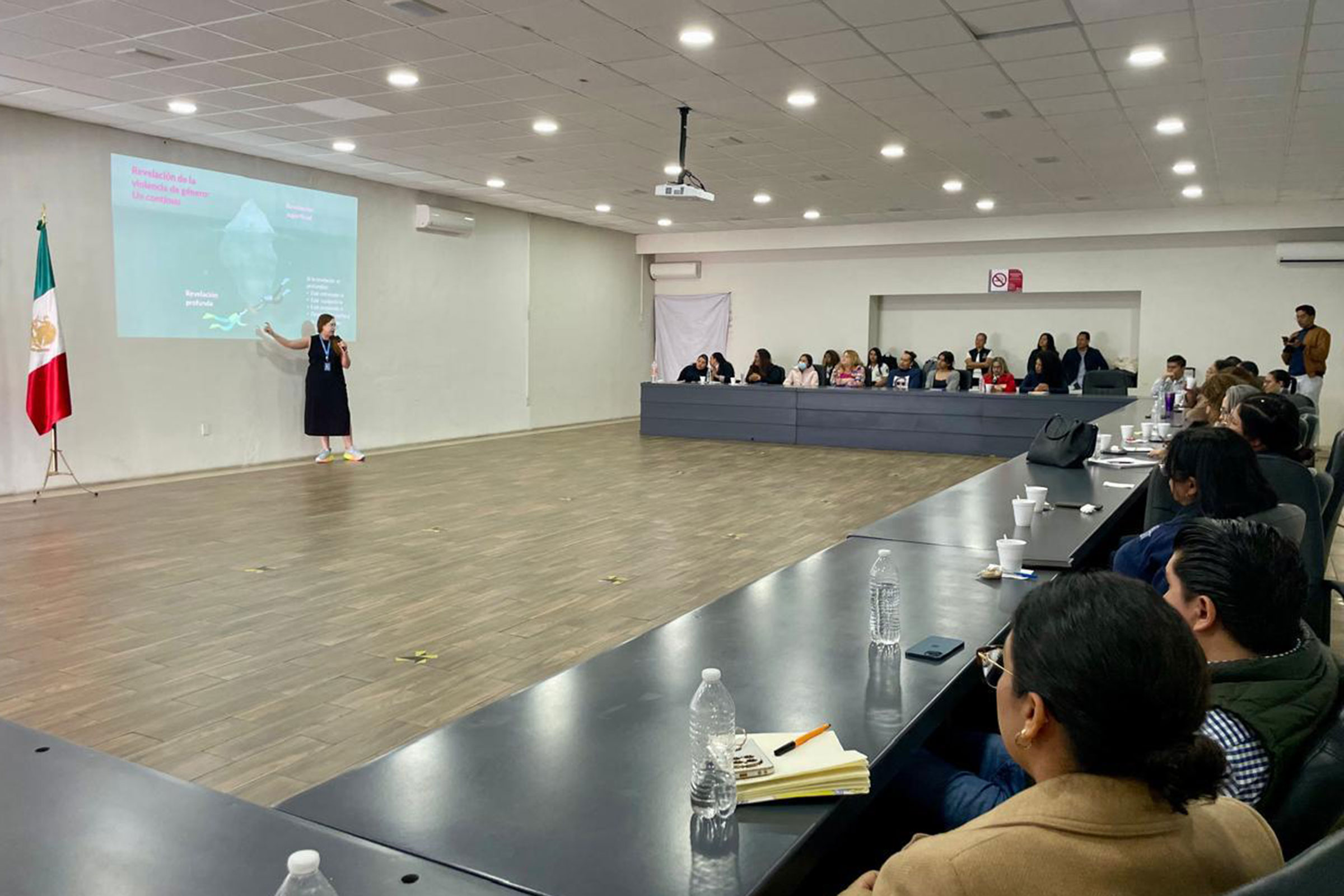
“It really is like a box of very different options you can do with your team to train them on how to better deal with a survivor,” Cardona said. “I think the toolkit has been so successful because it takes into perspective what it’s like to be sitting down in front of a survivor and having to talk to them about something so complicated and painful.”
Designed to be adaptable, the toolkit has been used in conflict and crisis situations around the world. Using tools from the toolkit, Cardona and her team have trained aid workers who serve refugees and asylum seekers crossing Mexico’s southern border, and internally displaced populations within Mexico. In Ukraine, it was used by government and nongovernmental organizations aiding people affected by the war. The International Criminal Court used some tools at a regional training for Francophone judges and investigators in central and west Africa; sexual violence frequently occurs in the area’s ongoing armed conflicts. In Uganda, home to nearly 2 million refugees and asylum seekers fleeing conflicts in neighboring countries, the Office of Public Prosecution has integrated parts of the toolkit into its investigative research.
“Anecdotally, people have been telling me that it’s very useful, but I’d love to track the impact better and understand more about how people are using it,” Seelinger said. “Are there new tools we should build in? Are there tools we can tweak to make them more effective? There is so much we still need to do to make sure that people who have survived gender-based violence get the help they need to recover and get justice.”
Writer
Tamara Schneider, MPH, PhD, is the senior science writer and assistant director of communications for WashU School of Public Health. She holds a bachelor’s degree in molecular biophysics & biochemistry and in sociology from Yale University, a master’s in public health from the University of California, Berkeley, and a PhD in biomedical science from the University of California, San Diego.